
From First Hurt to Lasting Relief: Rethinking Pain Treatment
Pain Uncovered Series - Part 2
Join Us Virtually
Event Details
Overview:
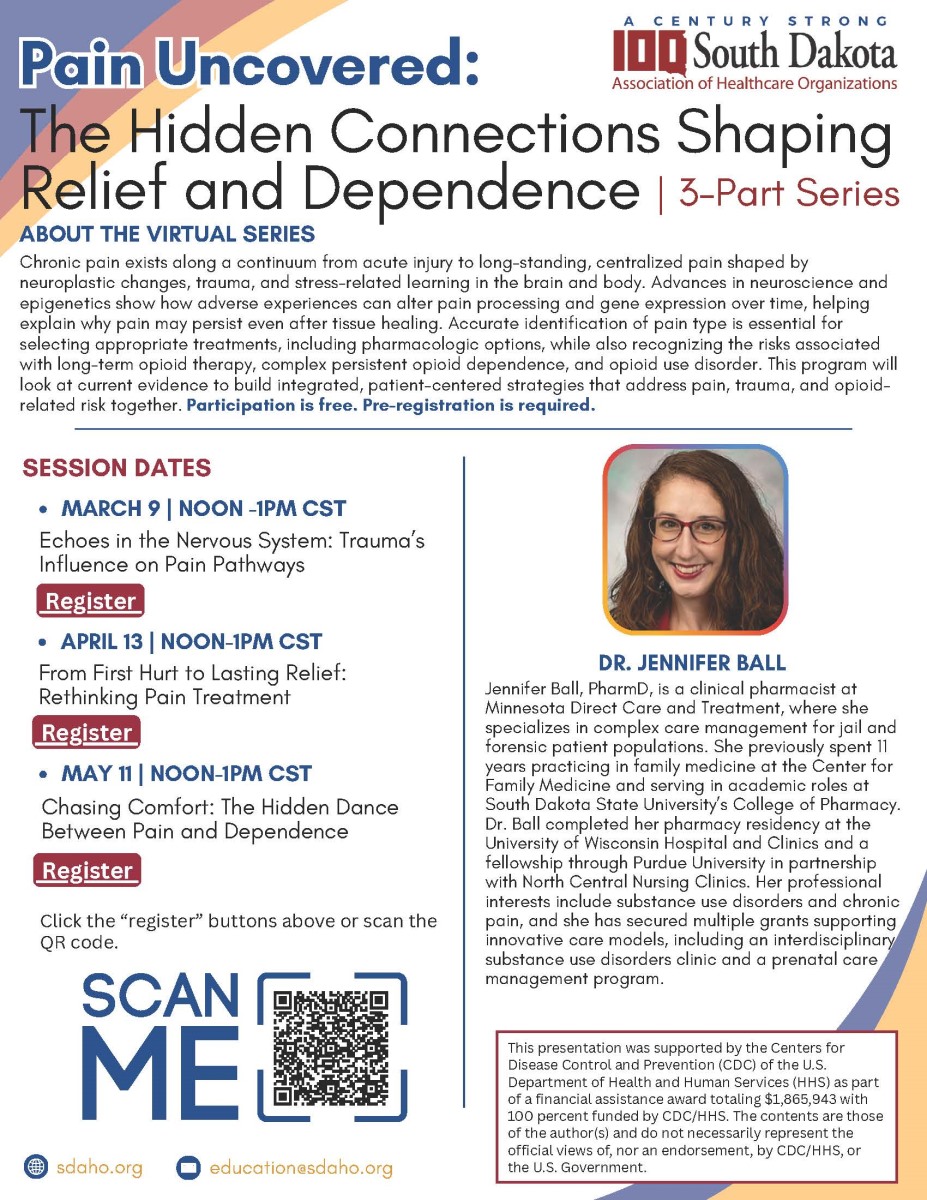
Chronic pain exists along a continuum from acute injury to long-standing, centralized pain shaped by neuroplastic changes, trauma, and stress-related learning in the brain and body. Advances in neuroscience and epigenetics show how adverse experiences can alter pain processing and gene expression over time, helping explain why pain may persist even after tissue healing. Accurate identification of pain type is essential for selecting appropriate treatments, including pharmacologic options, while also recognizing the risks associated with long-term opioid therapy, complex persistent opioid dependence, and opioid use disorder. This program will look at current evidence to build integrated, patient-centered strategies that address pain, trauma, and opioid-related risk together.
Session 2: From First Hurt to Lasting Relief: Rethinking Pain Treatment
This presentation reviews the spectrum of pain from acute and subacute to chronic, emphasizing how underlying mechanisms differ across pain types. We will discuss nociceptive, neuropathic, and centralized pain and how accurate pain classification guides effective treatment. The session also highlights pharmacologic management strategies, including indications, benefits, and risks of commonly used analgesic and adjuvant medications.
Objectives:
- Differentiate acute, subacute, and chronic pain, including key pathophysiologic mechanisms.
- Identify major pain categories (nociceptive, neuropathic, centralized) and their clinical features.
- Review pharmacologic management options and appropriate medication selection based on pain type and patient factors.
Audience: general
Jennifer Ball, PharmD, is a clinical pharmacist at Minnesota Direct Care and Treatment, where she specializes in complex care management for jail and forensic patient populations. She previously spent 11 years practicing in family medicine at the Center for Family Medicine and serving in academic roles at South Dakota State University’s College of Pharmacy. Dr. Ball completed her pharmacy residency at the University of Wisconsin Hospital and Clinics and a fellowship through Purdue University in partnership with North Central Nursing Clinics. Her professional interests include substance use disorders and chronic pain, and she has secured multiple grants supporting innovative care models, including an interdisciplinary substance use disorders clinic and a prenatal care management program. She is particularly passionate about helping patients understand the connections among neuroscience, behavior, physiology, and the role of medications in health and recovery.
Session 3: Chasing Comfort: The Hidden Dance Between Pain and Dependence | May 11